Preparing Backyard Chickens for Winter (and Rabbits)
By Kristen on December 1, 2025
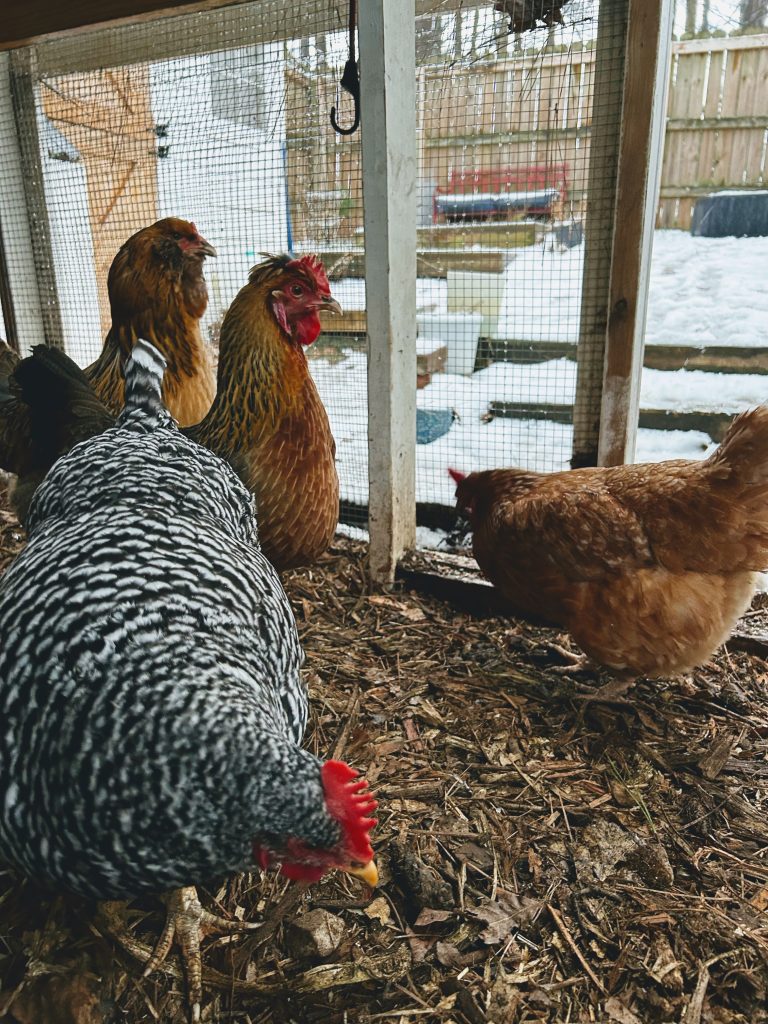
The cold winter months always seem to sneak up on me if I am not intentionally planning! We have already hit freezing temps here in the south, and although we got a head start, we have still had a few loose ends to button up to ensure our chickens and rabbits stay healthy during these colder months and have a successful winter.
It’s always a good idea to get a head start on preparing your backyard chickens for changing seasons and cold winters. For the cold months, we begin in early fall by cleaning up everything from spring and summer. We slowly start taking steps to ensure we are ready for the colder temperatures and the peak of winter.
We can prepare our backyard flock for the seasons in many different ways. Preparing for extreme heat and cold is one of the most essential ways to care for your chickens. Having a head start on these colder months will be helpful for your birds and you. You do not want to find yourself having to scramble at the last minute or not be able to provide what’s needed for your flock. We are not in the coldest of climates, but those freezing nights, cold weather days, or even winter storms that we get can still be cold enough to impact our birds and our rabbits. Most chickens are surprisingly resilient to colder weather, but keeping them warm, happy, and dry from damp conditions will help them to stay healthy and even sometimes to help lay during those slower egg production months.
Here are Some Key Steps to Having a Successful Winter
Provide a Clean Coop & Hutch
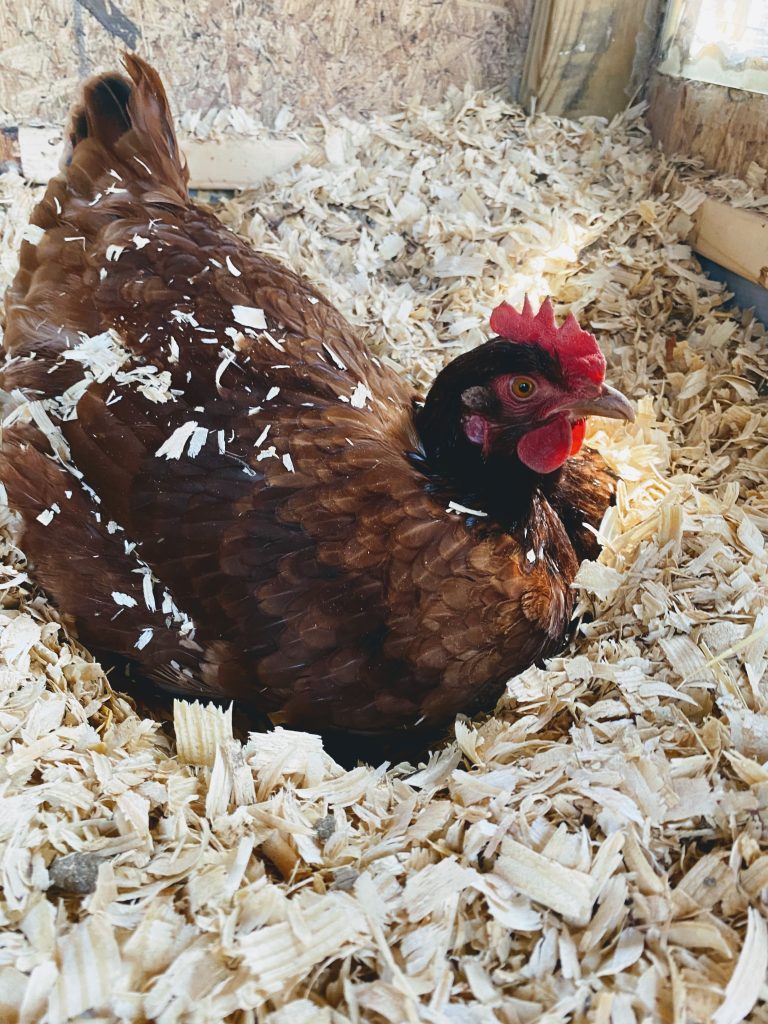
Start a successful winter season by cleaning everything out in the early fall after summer, and lay down some fresh, clean bedding to provide a clean coop for your flock. We clean both of our houses out with the seasons or as needed – this ensures proper maintenance of the coop and rabbit house. Since we use a deep bedding method in our chicken house (coop) and run, we will often toss the bedding from the house into the run for further breakdown or throw it in our first-stage compost bin. We use large pine shavings in the house and nesting boxes. You can also add straw for extra bedding and insulation. Keeping a clean coop will also help protect your chickens from respiratory illnesses that they are prone to.
Protect from Extremely Cold Air and Winds
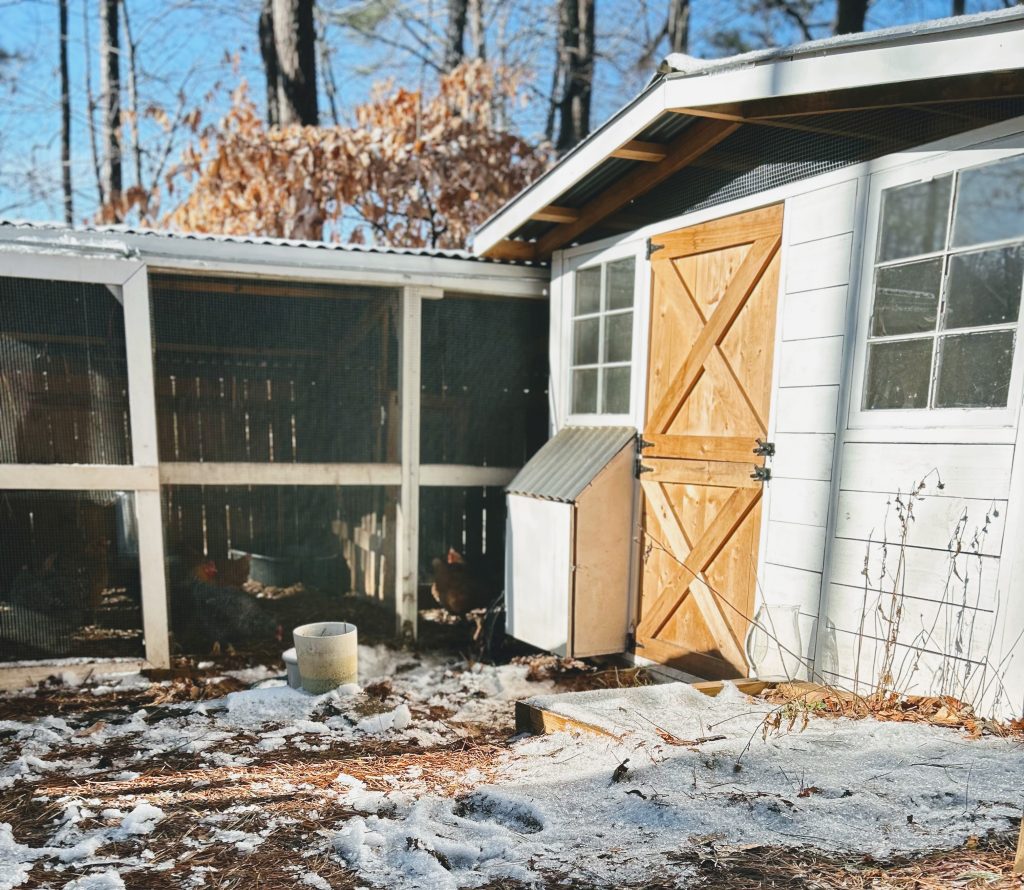
Our chickens love to head into the coop to stay out of the way of strong winds and cold air. Our coop has enough room and ventilation to provide a good heat source for our birds. Along with our deep bed method, which helps to create heat for them, our run has a fence on the back side of it, so our birds are protected from strong gusts of wind. If your flock does not have any protection, you can add some by putting up tarps or even stacking hay bales (straw bales) against their run walls – this is not something that we have had to personally do, but we have seen it be successful for others. Just make sure you have everything properly hung or placed so that nothing can fall on your animals. Also, keep good ventilation while you add ways to keep the cold winds and drafts out.
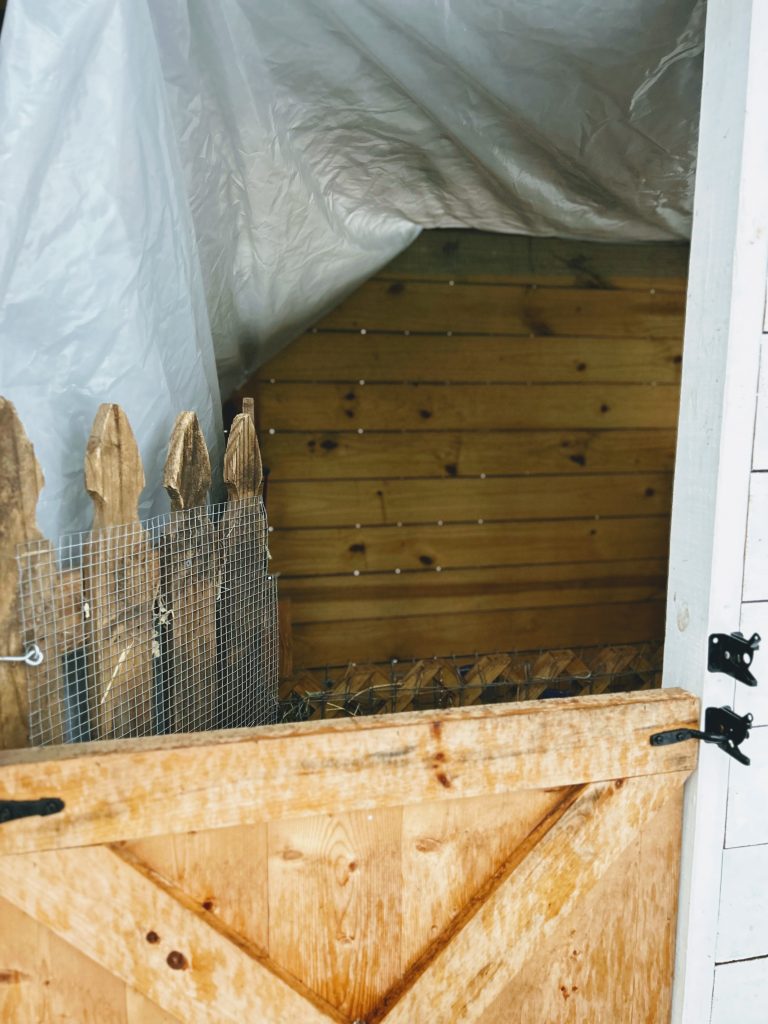
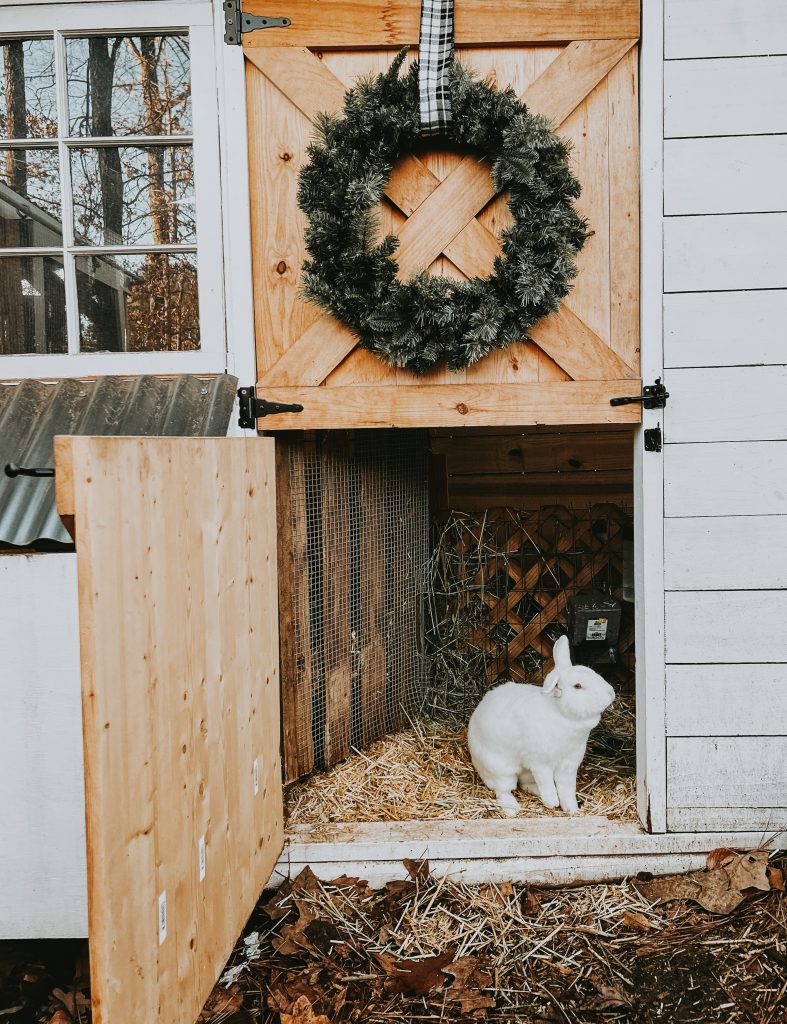
This picture was taken of our rabbit house. Here is one way we have wrapped the inside of the house to help keep them warm.
Provide Proper Air Ventilation – Fresh Air
It is very important to ensure your flock has proper ventilation while also protecting against any entry points for cold drafts. Take time to look around and close up any areas that can make it difficult for your flock to stay warm in those cold temperatures. Also, clean all areas of ventilation to ensure adequate ventilation to protect their health. As mentioned above, chickens are prone to respiratory issues, and providing proper ventilation will help reduce ammonia fumes from the chicken poop that cause illness. We have vents at the top of either side of our coop, along with a door that we will keep open in the warmer months. Once the temperatures get cold enough, we will shut the door at night and open it for them first thing in the morning. This adds extra warmth while they rest.
Deep Litter Method
I mentioned above that we use the deep bed (litter) method. The deep bed method helps you to manage your coop litter by mixing your flock’s poop with shavings by turning it with a shovel each day, and adding a fresh layer on top. This method provides warmth and insulation. If needed, we will also shovel some of the bedding into the run, which is also a deep method. All of this will eventually break down in our three-tier compost bin to use as soil in our garden.
Our rabbit house also has a deep litter on the ground; however, we are not turning over their flooring. We will take their poop and toss it right into the garden or on top of our compost. They also have boxes full of straw to go into for extra warmth or a shelf to jump onto to get off the ground if needed.
Providing Fresh Clean Water
Keep water from freezing, or make sure you are tending to your frozen water. Ours often freezes, so we are constantly tending to it. Hydration is key to your chickens’ health and keeping them warm. Keep your flock’s water from freezing with a water heater so they can constantly access fresh, unfrozen water. Be careful not to keep their water inside the coop, as your flock could experience frostbite if they get wet.
Feed & Extra Feed
Quality feed and constant access to feed are essential components of having a successful winter. Good nutrition will assist in body heat and overall health for your flock. Our birds’ diet consists of organic vegetables, herbs, and essential oils along with their layer feed. We make sure our chickens have constant access to their feed and waterer during the day. All of their food is put away at night to keep the chicken run free from rodents and any predators.
We will also provide extra hay, herbs, pellets, greens, and root vegetables from the garden for our rabbits.
Extra Nutrition
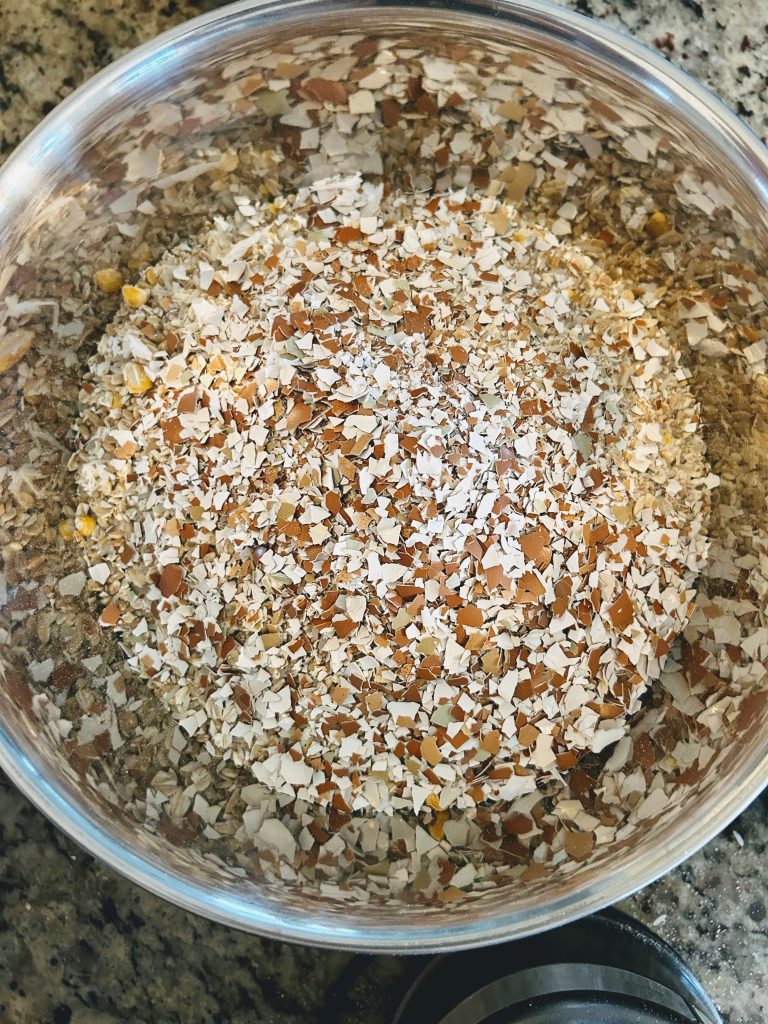
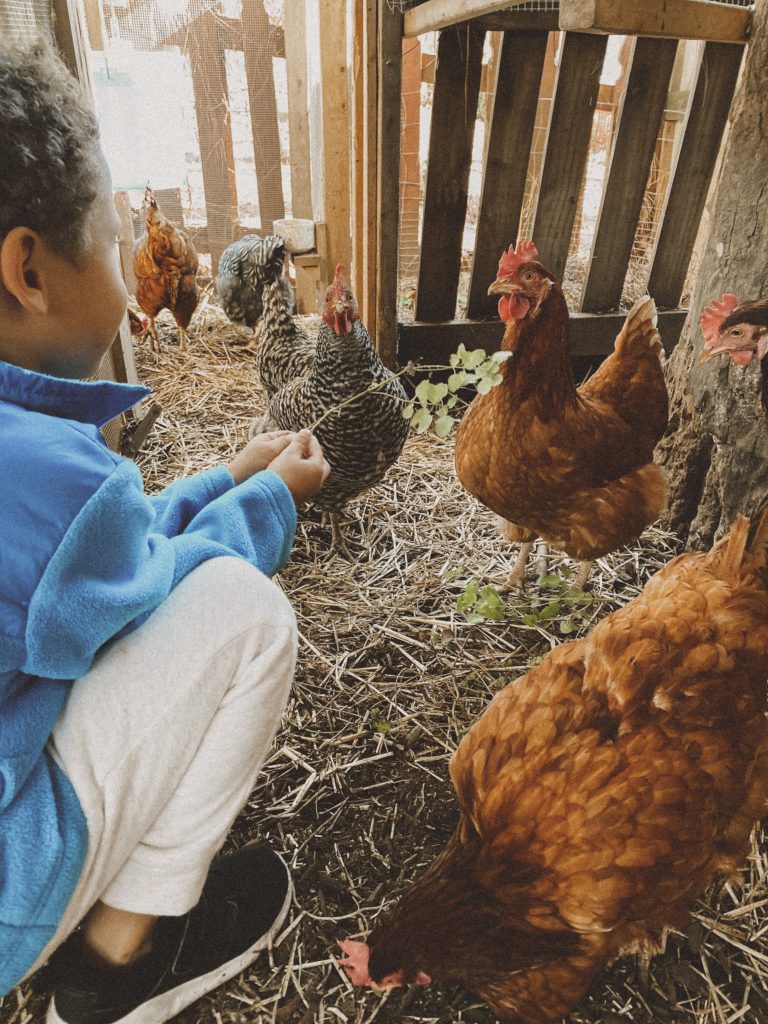
As mentioned above, we provide our birds with extra nutrition, including herbs, scratch grains rich in nutrients, vegetable scraps, leafy greens, and essential oils. We also include extra protein and calcium through mealworms, sardines, and crushed eggshells.
Light Exposure
Although chickens typically handle cold very well due to their feathers and slowly adapt to colder temperatures, having plenty of exposure or access to light is important. This will help your flock to stay healthy, keep warm, and encourage laying, so make sure they get plenty of light on those sunny days.
Supplemental Lighting and Heat
We do not use supplemental lighting (or supplemental heat) for laying or warmth; however, we have known people who enjoy using extra lighting to extend daylight for laying purposes. I would recommend not using a heat lamp to prevent fires – coming from a firefighter family. Chickens typically handle cold pretty well and do not often require extra heat. Daylight hours are vital in egg-laying production, but so is allowing your chickens to rest in winter. If your chickens stop laying eggs or lay fewer than usual, this is a common occurrence. However, you can use artificial light to simulate longer days and encourage egg laying. We personally choose not to do this.